Lorenz's page
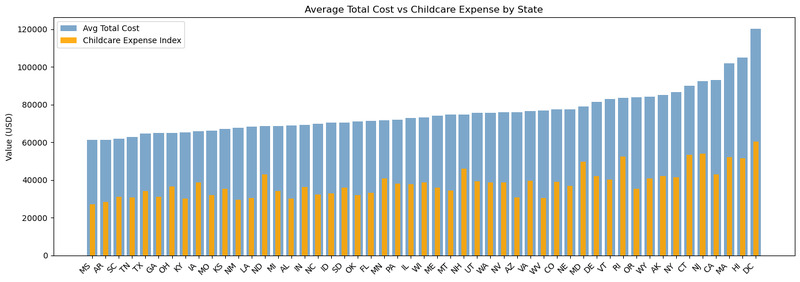
This is a graph which plots the a childcare expense index (‘Adjusted Income’) of families against their total cost of living.
It illustrates how the total cost of living increases exponentially, but the childcare burden only increases linearly. While this isn’t data surrounding a text, it can explain to us how certain cultural perceptions persist and die out. The perception in question is that the rich have easier financial lives by virtue of their wealth. There is a theme of the year we live in, and that’s increasing economic inequality. The rich live in a spending spree while the poor struggle to get by; it’s the so-called ‘K-shaped economy’. It would seem now more than ever that the rich are financially secure, which is something the graph partially expresses with the lower childcare-to-cost-of-living ratio seen. However, because of the constant nature of childcare expenses, the only other expenses must come from property: taxes, loan payments, or other things that are related to accumulating debt. This shows that the rich also spend more than the poor and that the ‘American Dream’ of financial control has faded in that regard.
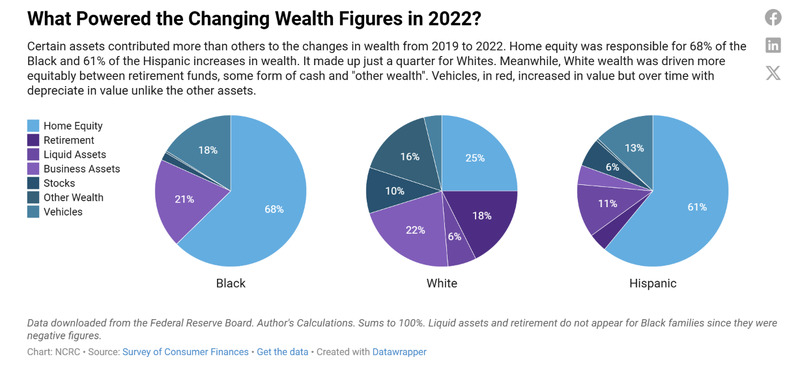
In the project that this is pulled from (the network analysis project), it was explained that the cultural conversation Black people were having then was about the Black struggle in the U.S, and there has been a theme of magazines for Black struggle throughout all of American history, whether it be Frederick Douglass’s magazine to this to Martin Luther King Jr. to the Black Lives Matter movement. Despite all of this, socioeconomic disparities persists. Here we argue that racial struggle persists because of different dimensions of wealth gathering among ethnic groups. The chart shows that among Black people, wealth gains were less diversified than for White people. It could be argued that White people were at the stage Black ones were decades ago, and that it will thus take decades for Blacks to reach where Whites are today. To conclude, it is simply impossible to expect the income gap to close because it isn’t possible to ask the dominant group to slow down. So the racial struggle must continue.